
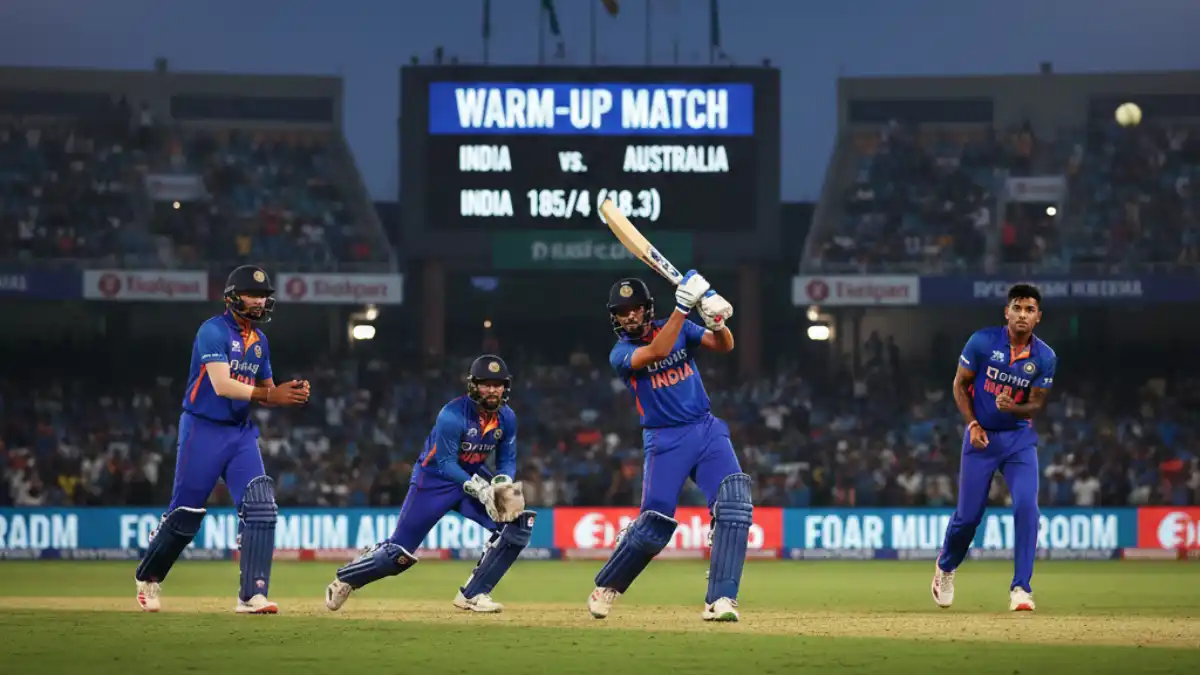
Before every major ICC tournament like the World Cup or Champions Trophy, the term “Warm-up Match” starts trending. You might see 15 players standing on the field or a batsman walking back to the pavilion despite not being out.
If you’ve ever wondered why these matches look a bit “different” from regular International cricket, you’re in the right place. Let’s dive into the fascinating world of warm-up fixtures.
The Concept: What is a Warm-up Match?
In simple terms, a warm-up match is a practice game played between two international teams before a major series or tournament begins. It serves as a bridge between net sessions and high-stakes competitive matches.
The primary goal isn’t just to win, but to help players acclimate to the local weather, pitch bounce, and match environment of the host country.
Warm-up vs. Official International Match: The Key Differences
While they look identical on TV, the rules governing a warm-up match are much more flexible than a standard ODI or T20I.
| Feature | Official International Match | Warm-up Match |
| Player Limit | Strictly Playing XI (11 players) | Full Squad (Up to 15 players) |
| Official Status | Counts toward Career Stats | Unofficial (Practice status) |
| Batting/Bowling | Fixed batting order | Any squad member can participate |
| ICC Points | Affects Rankings/Standings | No impact on Points Table |
Unique Rules That Make Them Special
Warm-up matches operate under relaxed ICC regulations to ensure teams get the most out of the session:
- Utilization of the Entire Squad: A team can let all 15 members of their squad participate. For instance, different players can bowl, while different ones can bat. However, only 11 players are allowed to field at any given time.
- Tactical “Retired Out”: If a star batsman like Virat Kohli or Rohit Sharma scores a quick 50, they might voluntarily walk off (Retired Out) to allow a junior player some time at the crease.
- Substitution: Captains can swap bowlers and fielders frequently without the usual rigid restrictions of international cricket.
Why Are These Matches Crucial for Teams?
- Testing the Conditions: For a team traveling from the flat tracks of India to the swinging conditions of England, these matches are vital to adjust their technique.
- Finding the Best Playing XI: Coaches use these games to experiment with different opening pairs or bowling combinations before the “real” tournament starts.
- Injury Management: It’s a safe space for players returning from injury to test their fitness in a match-like scenario without the pressure of losing ranking points.
Do the Runs and Wickets Count?
The most common question fans ask is: “Will a century in a warm-up match be added to a player’s record?” The answer is No. Since these matches do not have official List-A or International status, any runs scored or wickets taken are not added to a player’s official career statistics. They are purely for preparation.
The Bottom Line
Warm-up matches might not have the “life or death” intensity of a World Cup final, but they are the foundation of a successful campaign. They are the final dress rehearsal where mistakes are allowed, and strategies are perfected.