News

Income Tax in Union Budget 2026: What Changed and What Stayed the Same

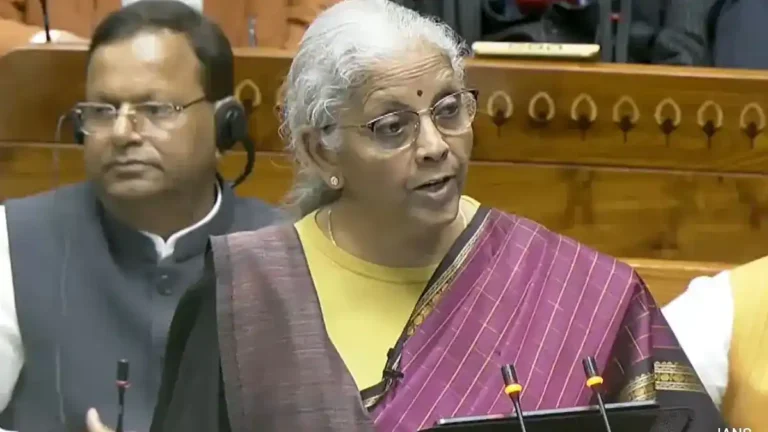
Here’s a clear, up-to-date look at the income tax provisions announced in India’s Union Budget 2026–27 by Finance Minister Nirmala Sitharaman on February 1, 2026 — focusing on direct tax changes, compliance simplifications, and what taxpayers should know this year.

1. No Change in Income Tax Slabs for Individuals

Contrary to widespread expectations of tax cuts or slab revisions for salaried individuals and middle-class taxpayers, the 2026 Budget did not change the existing income tax rates or slab structure in either the old or new tax regime. The government chose to maintain stability in tax rates after last year’s major tax reform.

Under the current new tax regime, the slab structure remains:

  • Income up to ₹4,00,000: Nil tax
  • ₹4,00,001 to ₹8,00,000: 5%
  • ₹8,00,001 to ₹12,00,000: 10%
  • ₹12,00,001 to ₹16,00,000: 15%
  • ₹16,00,001 to ₹20,00,000: 20%
  • ₹20,00,001 to ₹24,00,000: 25%
  • Above ₹24,00,000: 30%
    The existing tax exemptions and deductions (like standard deduction and rebate under Section 87A) also remain intact.

This means for many salaried taxpayers, incomes up to around ₹12 lakh remain effectively tax-free under the new regime after standard deductions are applied — a carry-over benefit from the earlier tax overhaul.

2. New Income Tax Act, 2025 Comes Into Force

One of the biggest reforms announced in the Budget is the transition to the Income Tax Act, 2025, which will replace the old 1961 law starting April 1, 2026. This modernised statute simplifies the framework by cutting the number of provisions and sections nearly in half, making tax administration more transparent and user-friendly.

Key features of the new Act include:

  • Simplified language and clearer tax provisions.
  • Fewer sections and rules, reducing ambiguity and legal disputes.
  • Replacing the “previous year-assessment year” model with a single tax year system — making tax filing and compliance easier.

3. Easier Compliance and Extended Deadlines

While tax rates stayed the same, the Budget introduced procedural changes aimed at reducing compliance burden:

  • Revised Income Tax Return (ITR) deadline extended to March 31 of the assessment year (up from December 31) — with a small nominal fee for late filings.
  • Staggered filing deadlines for different categories of taxpayers (e.g., ITR-1 and ITR-2 by July 31; non-audit businesses and trusts by August 31) are expected to reduce last-minute congestion.
  • A one-time six-month foreign asset disclosure window for taxpayers with small overseas assets to voluntarily report holdings with a specified tax and penalty regime has been introduced to clear up compliance issues.

4. Targeted Tax Exemptions and Reliefs

Although slabs didn’t change, the Budget provided some targeted tax relief measures:

  • Interest amounts awarded by the Motor Accident Claims Tribunal (MACT) to an individual will now be exempt from income tax, and there will be no TDS (Tax Deducted at Source) on such interest — ensuring full compensation for victims or families.
  • Higher thresholds for TCS (Tax Collected at Source) apply on overseas transactions such as foreign tour packages and education/medical remittances under Liberalised Remittance Scheme (LRS), making these transactions more cost-efficient for taxpayers.

5. Compliance-Friendly Changes and Reduced Litigation

The Budget also rationalises the prosecution framework under the Income Tax Act, shifting penalties away from criminal prosecution for minor defaults to fees, which is likely to reduce litigation and make the tax regime more “humane” and taxpayer-friendly.

Overall Takeaway for Taxpayers in 2026

Union Budget 2026 didn’t bring headline tax rate cuts but focused on stability, simplification, and ease of compliance. By introducing the new Income Tax Act from April 2026, extending return deadlines, and offering targeted exemptions, the government signalled a long-term shift toward a more straightforward and less contentious tax environment — while maintaining the broader tax structure introduced earlier.

Team GKOnline

Team GKOnline is a dedicated editorial team behind GKOnline, delivering timely and reliable updates from the world of technology, automobiles, and entertainment. Our goal is to provide accurate, easy-to-understand, and engaging news that keeps readers informed about the latest trends, launches, and industry developments. We focus on quality content, factual reporting.

Recent Posts

Oppo Reno 16 Pro first look revealed with 200MP camera, 7000mAh battery; May launch teased

Oppo Reno 16 series teaser reveals design ahead of launch. Check expected specs, 200MP camera on Reno 16 Pro, 7000mAh…

April 30, 2026

Xiaomi 17T, Xiaomi 17T Pro Specifications and Pricing Leak Ahead of Expected Launch

Xiaomi 17T and Xiaomi 17T Pro specifications, features, and expected pricing have leaked online ahead of their anticipated launch in…

April 29, 2026

Oppo F33 5G Goes on Sale in India With 7,000mAh Battery, 120Hz AMOLED Display

Oppo F33 5G is now available in India starting at Rs. 31,999. Check price, sale offers, specifications, and availability details.

April 29, 2026

OnePlus Nord CE6, Nord CE6 Lite India Sale Dates Announced Ahead of Launch on May 7

OnePlus Nord CE6 and Nord CE6 Lite sale dates in India have been officially confirmed ahead of their May 7…

April 29, 2026

OnePlus Ace 6 Ultra Goes Official With Dimensity 9500 Chip, 165Hz AMOLED Display and 8,600mAh Battery

OnePlus Ace 6 Ultra has been launched in China featuring a Dimensity 9500 chipset, 165Hz AMOLED display, 50MP dual cameras,…

April 28, 2026

Vivo Y500s 5G Launched With 7,200mAh Battery, 50MP Main Camera, Snapdragon 4 Gen 2 Chipset: Price, Specs

Vivo Y500s has been launched in China with a 7,200mAh battery, 50MP camera, and Snapdragon 4 Gen 2 SoC. Check…

April 27, 2026