
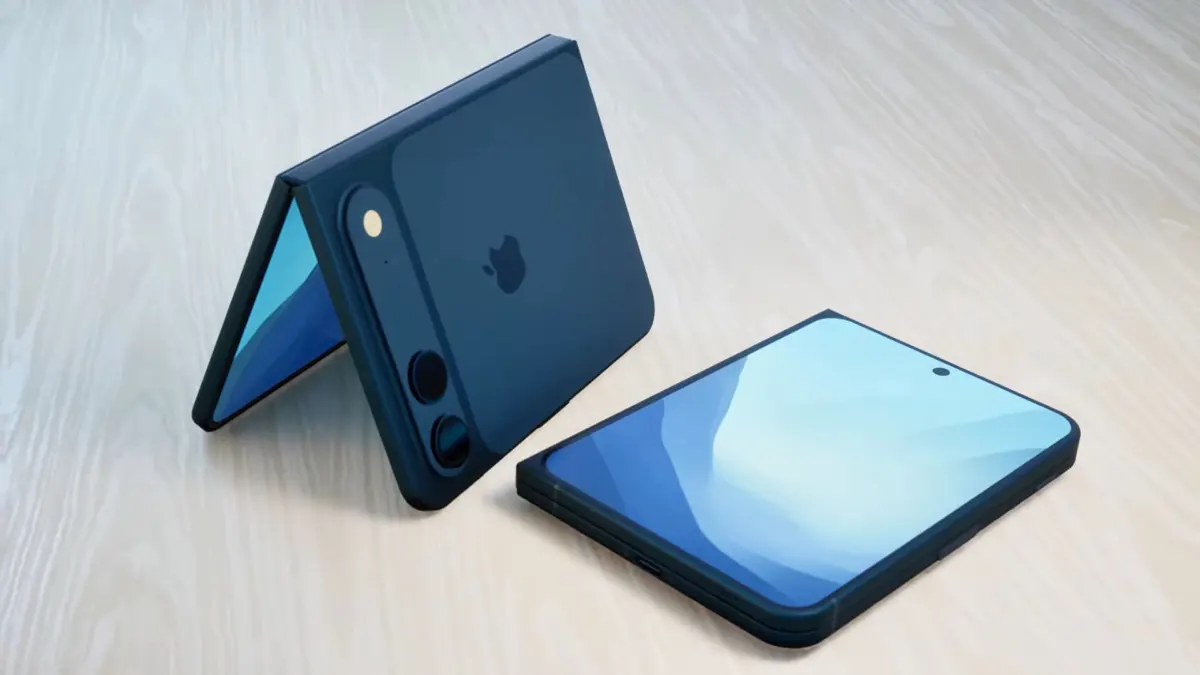
Apple is reportedly preparing to enter the foldable smartphone market with its first foldable iPhone, which could launch in 2026 as part of the company’s 50th anniversary celebrations.
According to recent reports and leaks, the upcoming device could feature a book-style folding design, similar to other premium foldable smartphones currently available in the market. However, Apple is expected to introduce several unique design and hardware improvements.
The foldable iPhone may compete directly with devices like the Samsung Galaxy Z Fold 7 and Google Pixel 10 Pro Fold, but early leaks suggest Apple’s version could have a wider design and improved durability.
Foldable iPhone Design and Display
Leaks indicate that the foldable iPhone could feature a 7.8-inch crease-less OLED inner display, offering a tablet-like experience when unfolded.
The device is also expected to include a 5.5-inch external display, allowing users to perform everyday tasks without opening the phone.
Display highlights may include:
- 7.8-inch OLED inner display with minimal crease
- 5.5-inch outer screen for quick access
- Punch-hole cutouts for selfie cameras on both displays
- Slim and compact folding design
Interestingly, the foldable iPhone may skip Face ID to maintain a slimmer design. Instead, Apple could bring back Touch ID integrated into the power button.
Another key innovation could be the use of a Liquid Metal hinge, which may improve durability and make the folding mechanism stronger compared to existing foldable devices.
Expected Specifications and Performance
The foldable iPhone is rumored to run on Apple’s upcoming A20 Pro chipset, which could also power the iPhone 18 Pro models.
Expected hardware specifications include:
- A20 Pro processor
- 12GB RAM
- Storage options of 256GB, 512GB, and 1TB
One of the biggest highlights of the device could be its 5,500mAh battery, which would make it the largest battery ever used in an iPhone.
Camera Features
The foldable iPhone is also expected to bring an upgraded camera system.
Possible camera setup:
- Dual rear camera system
- Two front cameras (one on each display)
This would give the device a total of four cameras, allowing users to take photos and make video calls in both folded and unfolded modes.
Multitasking and Software
The foldable iPhone could introduce advanced multitasking features inspired by iPadOS, allowing users to run multiple apps and perform productivity tasks more efficiently.
Despite these tablet-like capabilities, the device is expected to run on iOS, ensuring compatibility with Apple’s existing ecosystem.
Expected Launch Date and Price
Reports suggest that Apple could launch the foldable iPhone in September 2026, alongside the iPhone 18 Pro lineup.
The device is expected to be positioned as a premium flagship product, with rumors pointing to a starting price of around $2,400 (approximately ₹2,15,000 in India).
For comparison, the Samsung Galaxy Z Fold 7 currently starts at around ₹1,74,999 in India.
Conclusion
If the leaks turn out to be accurate, Apple’s first foldable iPhone could become one of the most anticipated smartphones of 2026. With a crease-free OLED display, powerful A20 Pro chip, large battery, and advanced multitasking features, the device could represent a major step forward for Apple in the foldable smartphone segment.
However, official confirmation from Apple is still awaited.
FAQs
When will Apple launch its first foldable iPhone?
Reports suggest that Apple may launch its first foldable iPhone in September 2026.
What display size will the foldable iPhone have?
The device is expected to feature a 7.8-inch inner OLED display and a 5.5-inch outer screen.
Which processor will power the foldable iPhone?
The smartphone may be powered by Apple’s A20 Pro chipset, expected to debut with the iPhone 18 Pro models.
How much could the foldable iPhone cost?
The device is rumored to start at around $2,400 (approximately ₹2,15,000 in India).
Will the foldable iPhone support Face ID?
Leaks suggest that the device might skip Face ID and instead include Touch ID integrated into the power button.