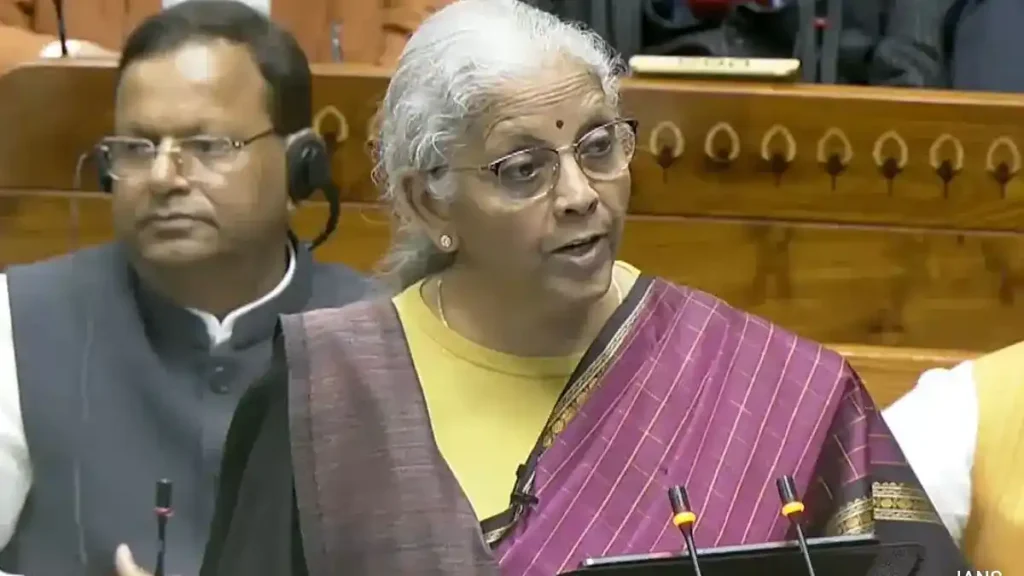

India’s Finance Minister Nirmala Sitharaman presented the Union Budget 2026–27 in Parliament on 1 February 2026, unveiling a wide-ranging set of policies aimed at economic growth, infrastructure, taxation reforms, and sector-wise development. The Budget focuses on strategic investment, fiscal discipline, and long-term reforms to accelerate India’s domestic capabilities and global competitiveness. The following are the key highlights of the Union Budget 2026 from live coverage and reporting by multiple news sources.
1. Record Capital Expenditure to Boost Growth
The government announced a record capital expenditure allocation of ₹12.2 lakh crore for the fiscal year 2026–27, significantly higher than the previous year’s figure. This large capex aims to drive infrastructure development across transport, logistics, urban projects, and energy networks — reinforcing India’s investment-led growth strategy.
Also Read: Sensex and Nifty Slide Sharply After Union Budget 2026: What Happened in the Stock Market
2. Seven High-Speed Rail Corridors and Freight Networks
One of the most eye-catching infrastructure announcements was the plan to build seven new high-speed rail corridors connecting key urban and economic hubs such as Mumbai–Pune, Pune–Hyderabad, and Delhi–Varanasi. In addition, a dedicated east-west freight corridor from Dankuni (West Bengal) to Surat (Gujarat) was proposed to strengthen goods movement.
3. Support for Advanced Manufacturing and Technology
The Budget unveiled the India Semiconductor Mission 2.0 with an outlay of ₹40,000 crore to deepen India’s semiconductor manufacturing ecosystem, promote research and training, and boost technology-led industry expansion. There was also a substantial push for rare-earth mineral corridors in states like Odisha, Kerala, Andhra Pradesh, and Tamil Nadu to secure critical raw materials for high-tech sectors.
Also Read: Income Tax in Union Budget 2026: What Changed and What Stayed the Same
4. Fiscal Discipline and Deficit Target
The government reaffirmed its commitment to fiscal prudence, targeting a fiscal deficit of approximately 4.3 % of GDP for 2026–27 — slightly lower than the current fiscal year to maintain stability while expanding investment.
5. Tax Reforms and Ease of Compliance
The Budget proposed reforms including a simplified Income Tax Act coming into effect from April 2026, redesigned return filing processes, and extended timelines to ease compliance for taxpayers. Measures such as reducing Tax Collected at Source (TCS) on overseas travel and education remittances under the Liberalised Remittance Scheme were also introduced.
Also Read: Budget 2026 Explained: Why This Is the Most Confident and Assured Phase of Modinomics Yet
6. Agriculture and Rural Development
The allocation for the agriculture sector was increased to ₹1.63 lakh crore to support high-value crops, allied activities, and modern agricultural practices designed to improve farmer incomes and rural employment.
7. MSME, Textile, and Village Industry Boost
Comprehensive support for Micro, Small & Medium Enterprises (MSMEs) was laid out, including growth funding and targeted programs for traditional industries like khadi, handloom, and silk — particularly in states like Uttar Pradesh — to spur employment and production growth.
8. Defence and Strategic Sector Allocations
The Budget allocated ₹7.85 lakh crore to the defence sector, prioritising modernization, procurement of advanced equipment, and strategic force enhancement. Capital outlay and pension obligations were also addressed to balance current and future defence requirements.
9. Education, Healthcare, and Human Development
Investments were announced for healthcare infrastructure, allied health workforce training, and education-to-employment initiatives. This includes establishing new hostels for girls, expanding skill development programs, and setting up content creator labs in schools and colleges for technology and creative sector education.
10. Environment, Clean Energy, and Infrastructure Schemes
The Budget introduced support for solar power, battery storage, and electric vehicles in key regions, plus customs duty reductions on solar inputs and related technologies to drive clean energy adoption and cost-effective renewable systems.
Summary
Union Budget 2026–27 prioritises infrastructure, technology-driven manufacturing, fiscal discipline, and structural reforms while extending targeted support to agriculture, MSMEs, and human capital development. By blending record public investment with tax compliance reforms and sector-specific initiatives, the Budget aims to strengthen India’s long-term economic trajectory and global competitiveness.